


The Sound of the Music of the Whispering Woods
How Music Shaped the World of Piano Zen

The music that eventually became Music of the Whispering Woods didn't start there.
It actually goes back several years, before I even started working on the Piano Zen novel.
At the time, I was pulling together different musical ideas from various projects. Some were older sketches, some were newer pieces, and I brought them together into a single album.
But it never quite settled.
The music was there, and I liked it, but the album itself didn't have a clear identity. The titles didn't feel right. The concept felt a little forced. Eventually, I set it aside.
For a while, I didn't think much about it.
Then, years later, as I began to explore the idea of writing a novel that moved between the real world and a dream world, I found myself coming back to that music.
Not in a deliberate way. It just started to reappear.
I would listen to those pieces while thinking about the story, and something about them felt connected to it. Almost like they were already part of that world, even before I had fully written it.
In a strange way, the music began to shape how I imagined certain scenes. The music and storytelling became inseparable — not something I was trying to explain, but something I could feel as I was writing. Like a quiet soundtrack running underneath everything.
Those pieces always had a slightly cinematic quality to them, at least to me. There was a movement between light and dark, between stillness and motion, that seemed to mirror what was happening in the novel.
Speaking of mirrors, around that time, I found myself returning to Ravel's Miroirs, especially Une barque sur l'océan (a boat on the ocean). There's something about the way that piece moves… it doesn't feel fixed. It drifts, shifts, almost like it's finding its way as it goes.
References to Ravel's Miroirs (composed in 1906) appear throughout the novel, sometimes directly, sometimes only as an influence in the background. Even the idea of "mirrors" found its way into the story, this sense of two worlds reflecting each other, real and dream, surface and depth.
Looking back, I can hear some of that in these pieces too.
And over time, the connection became clearer. The relationship between music and storytelling deepened — what once felt like a separate project suddenly became woven into the fabric of Piano Zen itself.
What once felt like a project that hadn't quite found its place… suddenly had one.
It became part of the Piano Zen world. Not as a separate thing, but as something woven into it.
"The Palace of Ubar" from Music of the Whispering Woods
Composed and performed by Thomas Rheingans
This piece, The Palace of Ubar, connects to a moment in the story where William is traveling through the dream world.
He's carried by the wind, using his book almost like a sail, moving across a vast desert toward a place he doesn't fully understand yet. His friend Densho is with him, and the wind spirit Nasim is guiding the journey.
It's one of those moments where the boundaries between the real and the imagined start to dissolve.
And in some ways, the music arrived at that same place long before I did.
—Thomas Rheingans
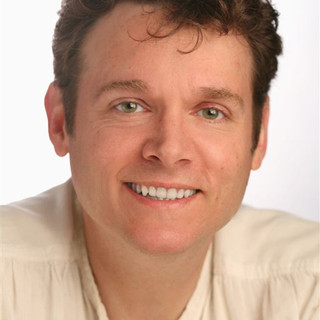
Novelist & Pianist
Creator of Piano Zen


Comments